
Anasalva Antibiotics Classification
Anasalva's Antibiotic Classification functionality is designed to provide healthcare professionals and general users with a comprehensive and detailed reference on the different types of antibiotics, their uses, mechanisms of action and special considerations. This tool is essential for the effective and safe management of bacterial infections.
Main Characteristics:
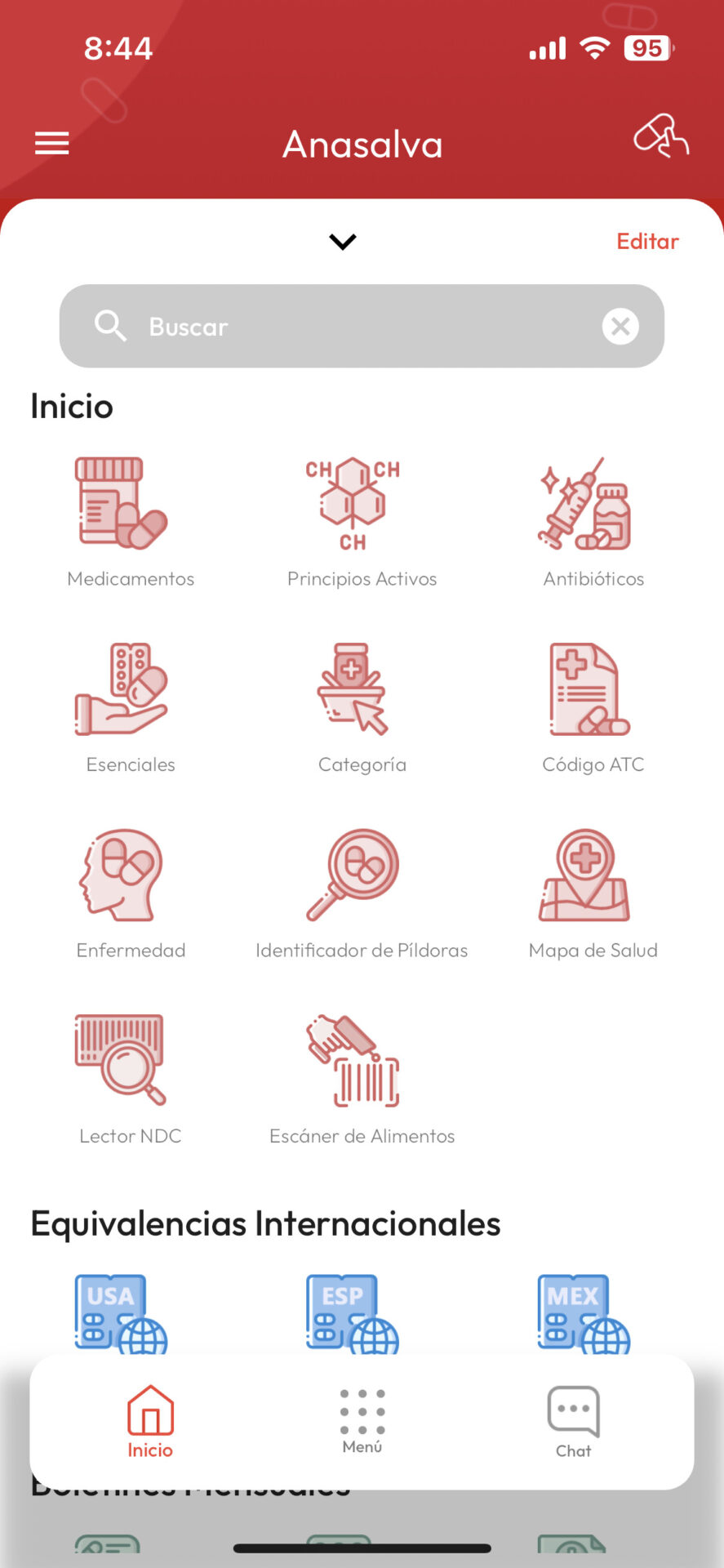
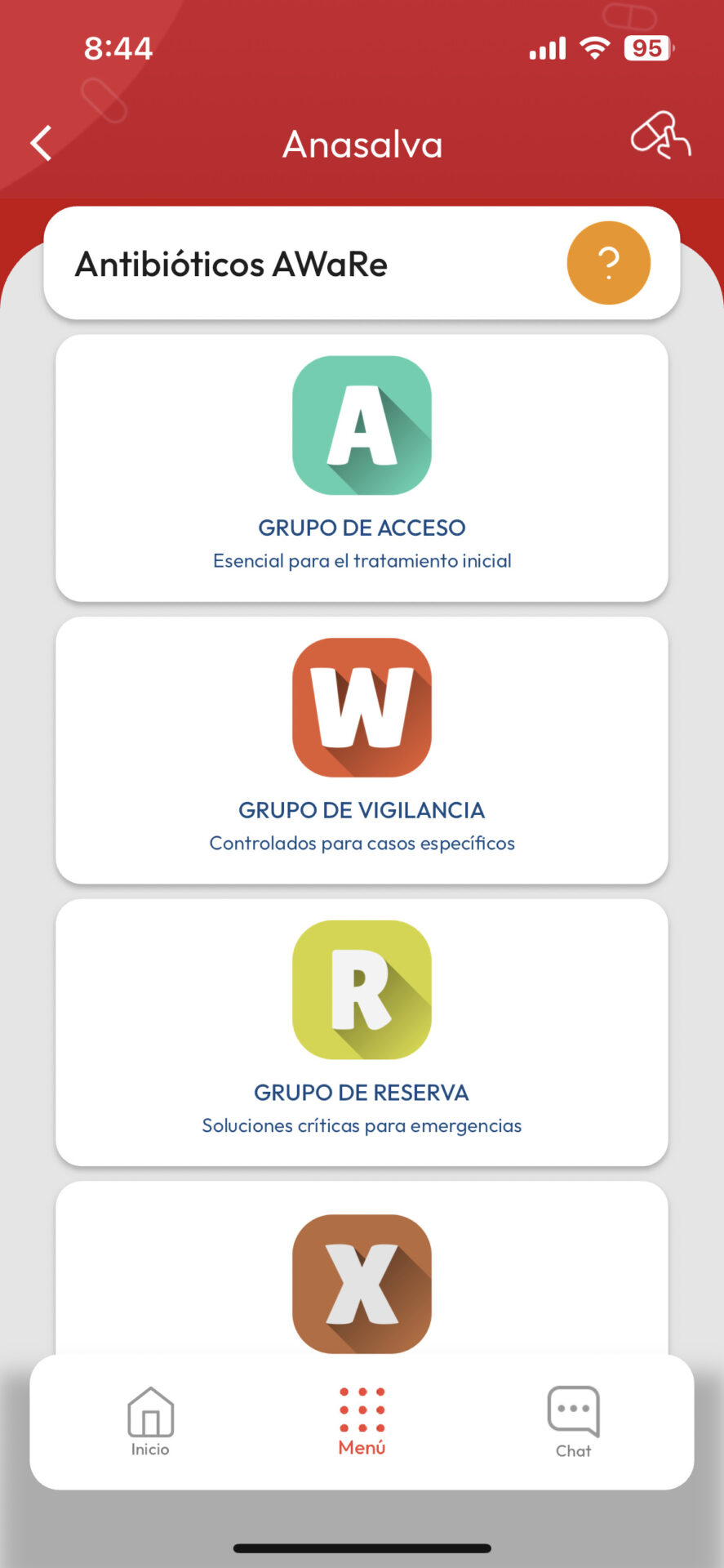
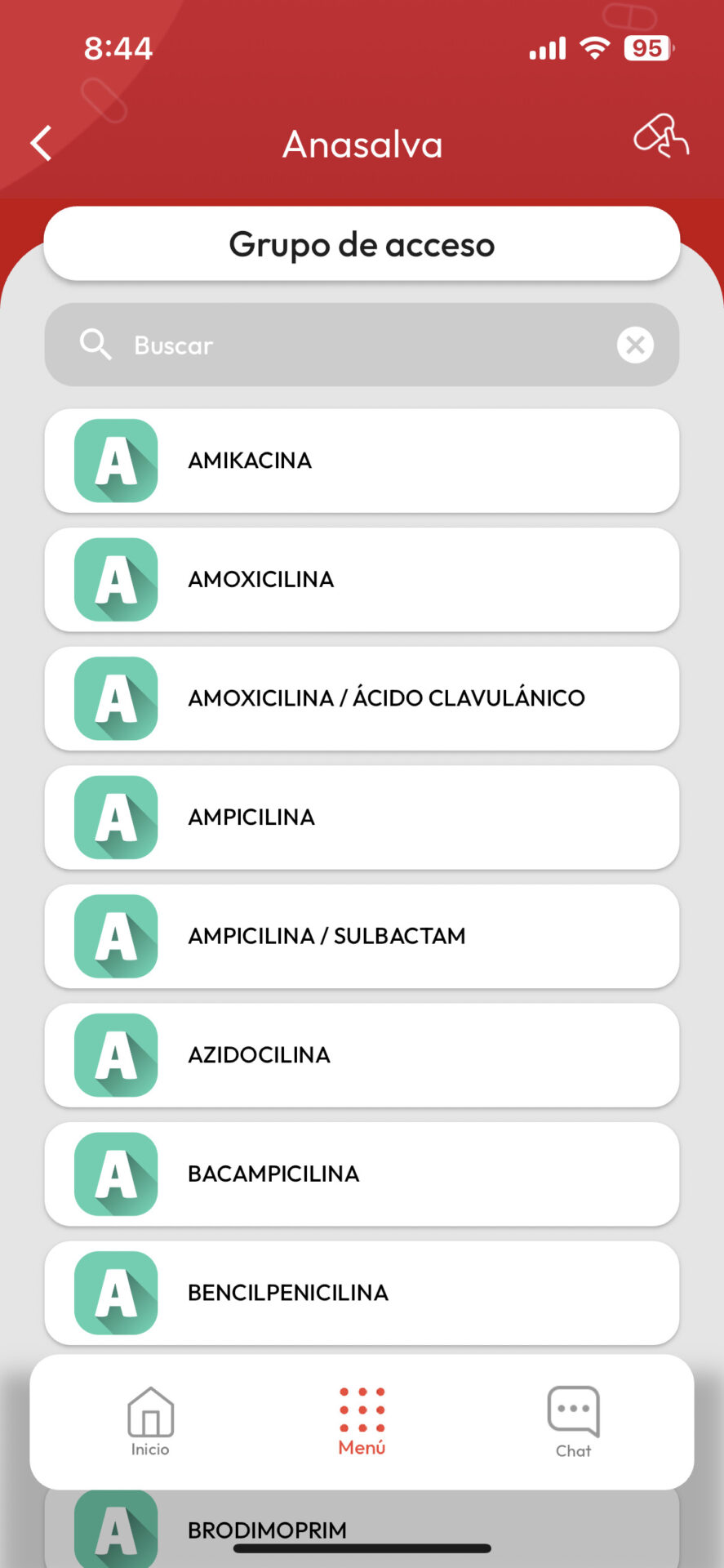
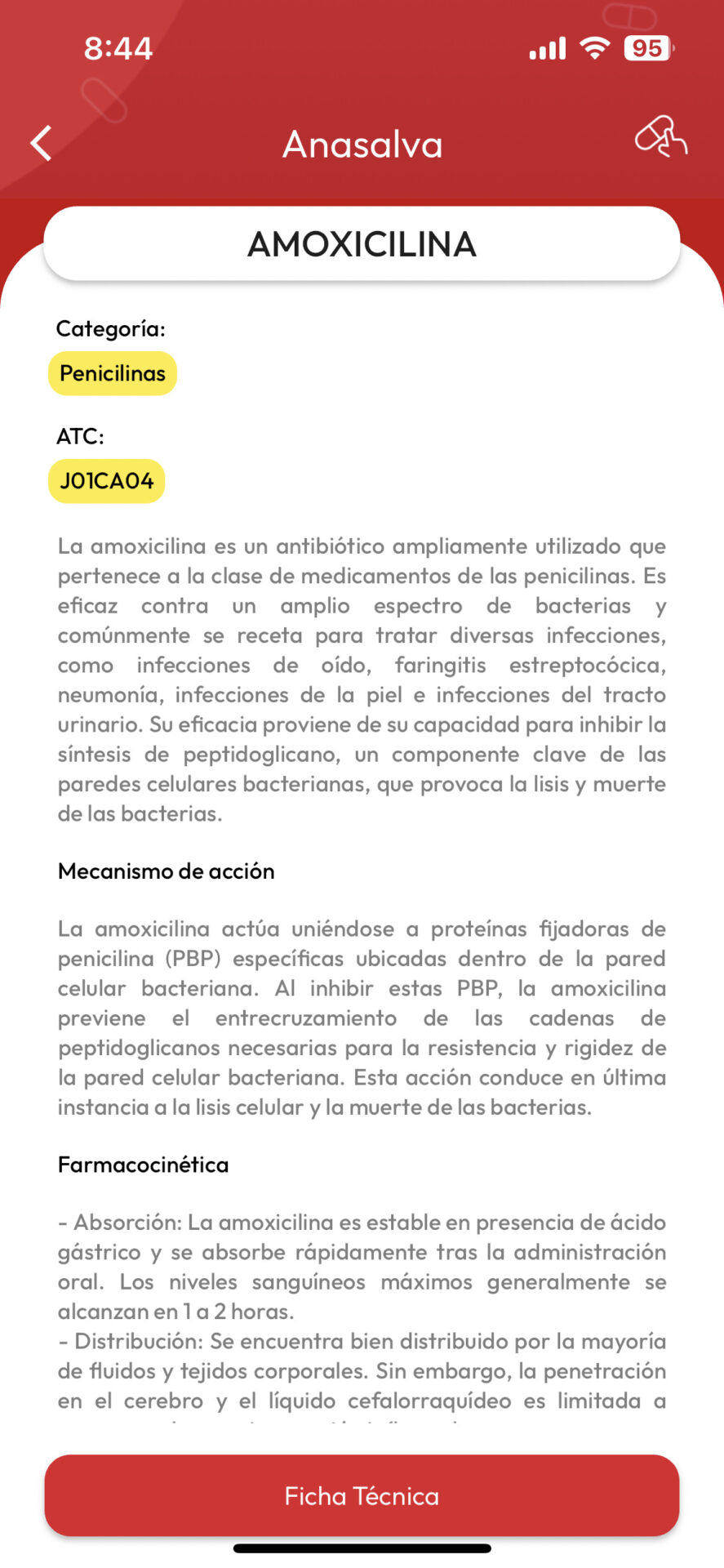
- Group Classification: Functionality organizes antibiotics into categories based on their chemical class and mechanism of action, such as penicillins, cephalosporins, macrolides, quinolones, aminoglycosides, among others. This facilitates the search and comparison of different therapeutic options.
- Detailed Information: Each antibiotic listed includes detailed information on its spectrum of action, indications, recommended dosage, possible side effects and contraindications. This helps users to understand the specific characteristics of each drug.
- Mechanisms of Action: The functionality explains how different antibiotics act at the cellular level, providing an in-depth understanding of how these drugs fight bacterial infections.
- Bacterial Resistance: The tool includes information on bacterial resistance, a critical issue today. It provides data on bacterial strains that have developed resistance to certain antibiotics and recommendations to prevent the spread of this resistance.
- User-friendly interface: Designed with an intuitive and easy-to-use interface, the functionality allows users to quickly access the necessary information, perform detailed searches and compare different therapeutic options without complications.
Anasalva's Antibiotic Classification functionality is an essential tool for improving clinical practice and education in the use of antibiotics. By providing detailed and up-to-date information, Anasalva helps to prevent bacterial resistance and ensure effective treatments, contributing to the general welfare and public health.




 EN
EN  ES
ES