
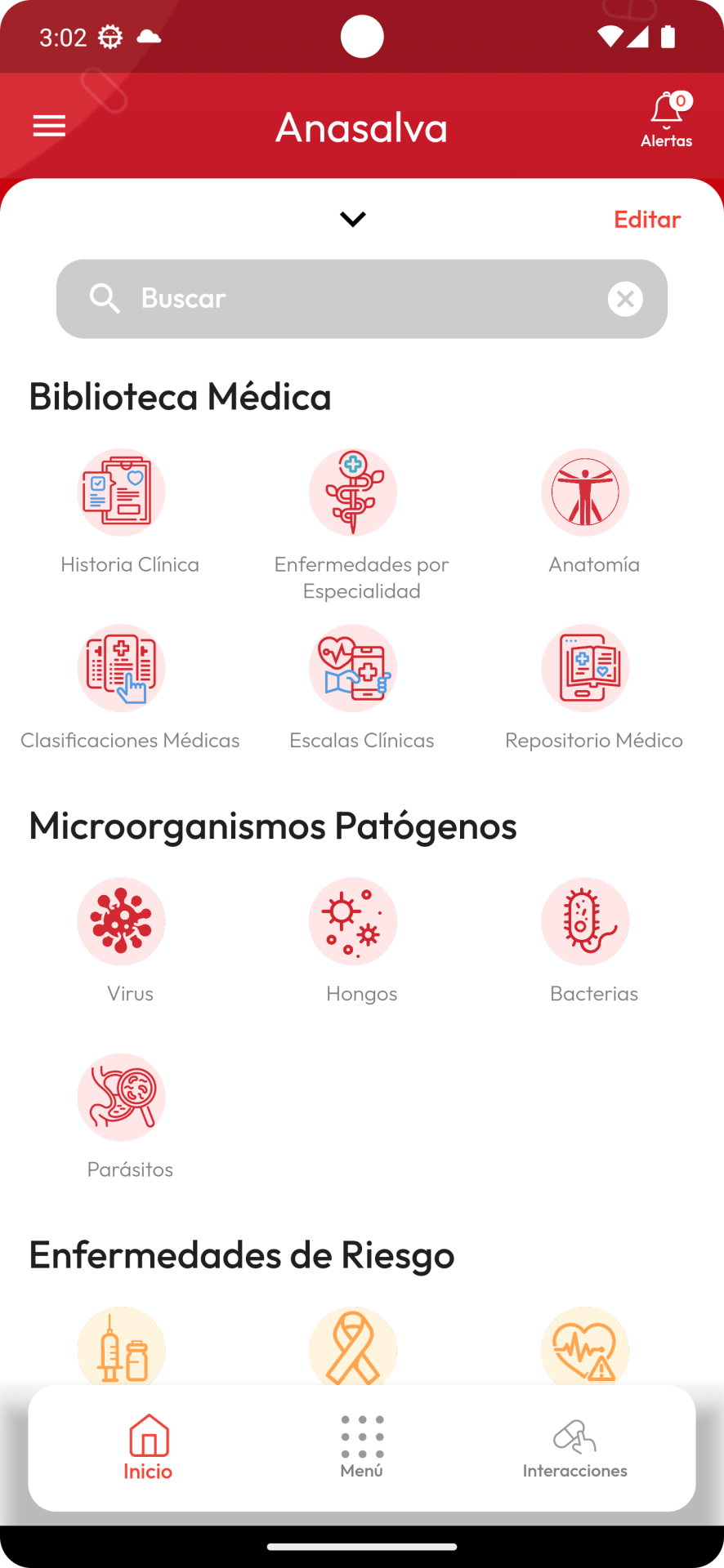
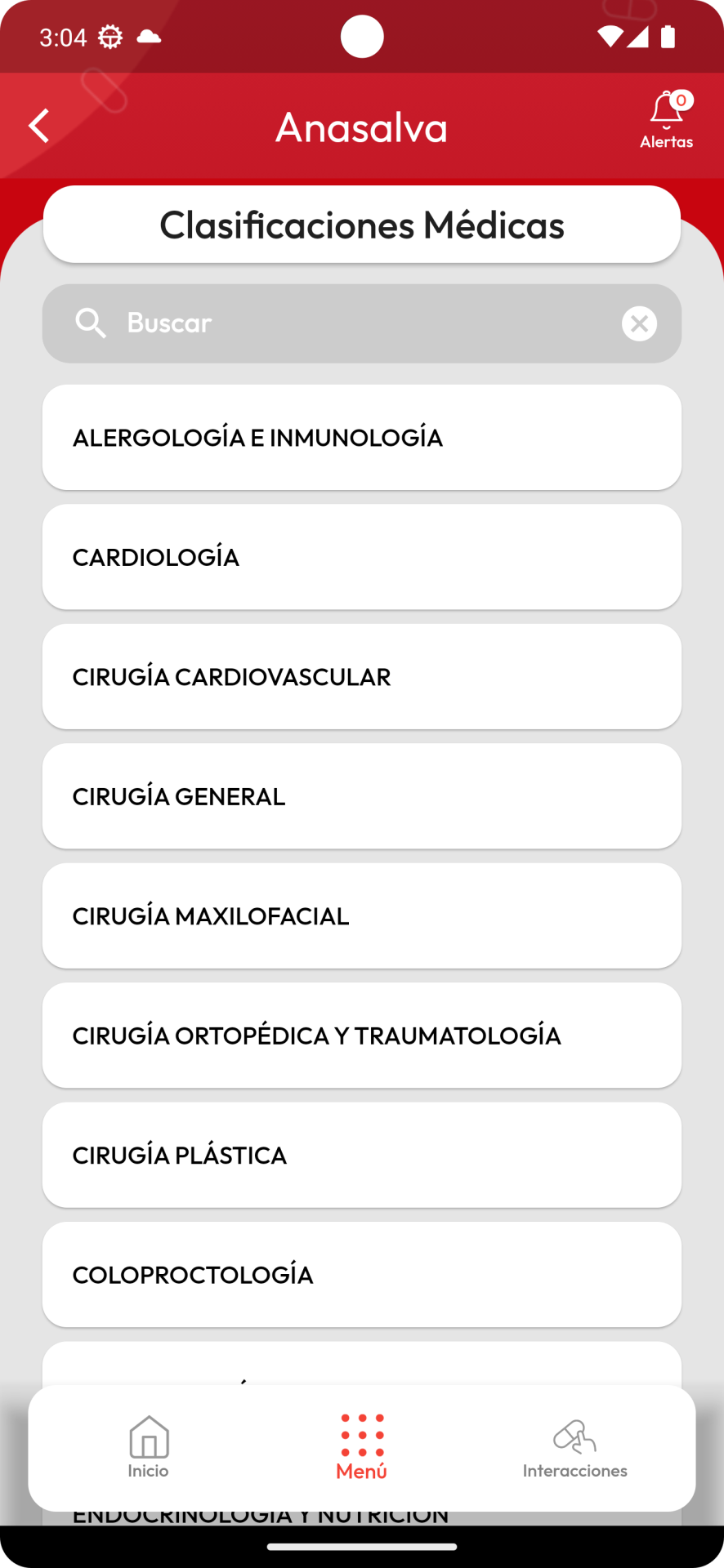
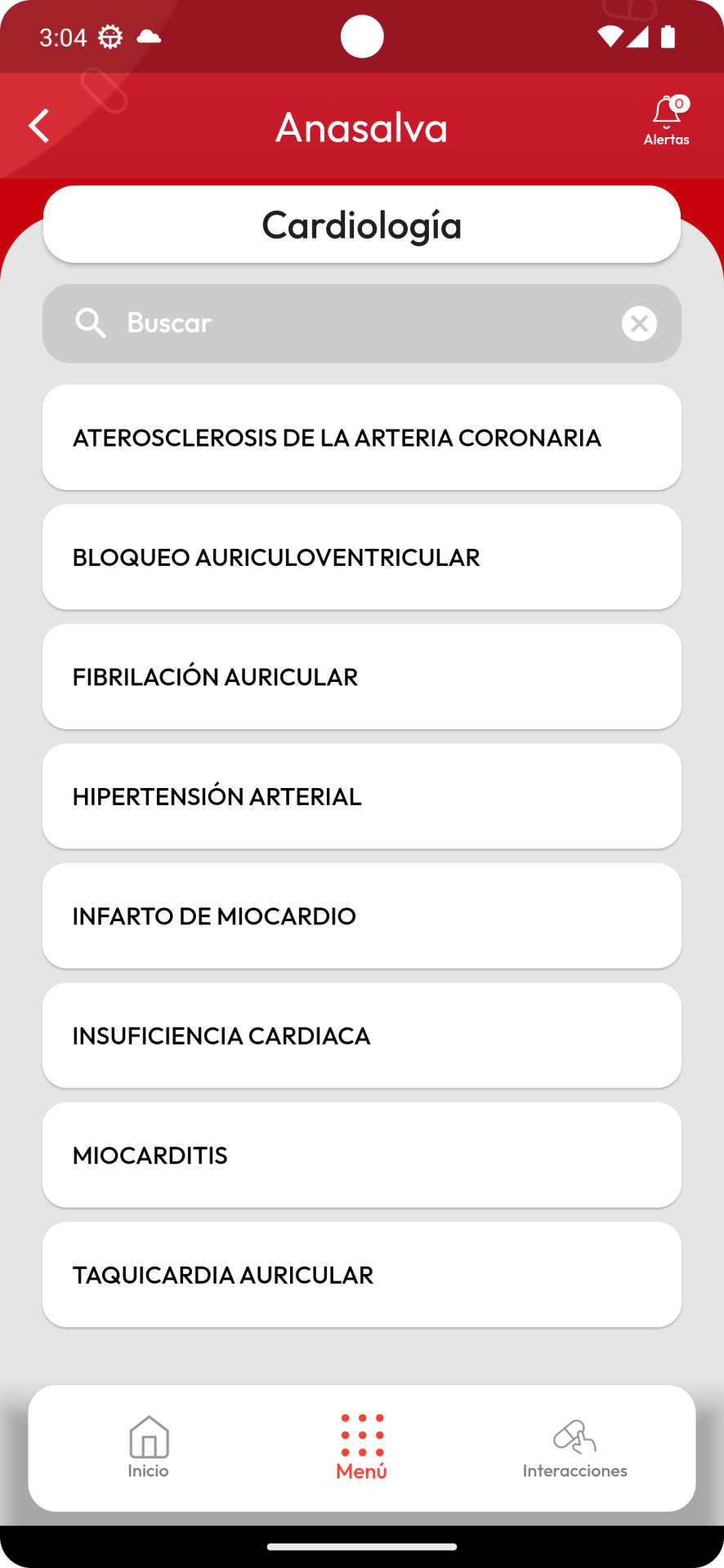
The functionality of «Medical Classifications» in ANASALVA is an essential and organized tool that provides a detailed understanding of diseases according to different parameters. Its main components are described below:
- Classification by Cause: Organizes diseases according to their underlying causes, whether genetic, environmental, infectious or other. This classification facilitates the identification of the causal basis of diseases, allowing for more specific treatment and prevention strategies.
- Classification by Symptoms and Signs: Groups diseases according to the predominant symptoms and signs presented by patients. This classification provides a quick and orderly overview of diseases according to their clinical manifestations, which helps in identification and diagnosis.
- Severity Classification: Categorizes diseases according to their level of severity, allowing physicians to determine the appropriate treatment and establish a prognosis. It facilitates clinical decision making based on the severity of the disease.
- Classification by Time of Evolution: Divides diseases according to their time of evolution, which is crucial for timely diagnosis and treatment. It allows understanding the progression of the disease and applying appropriate interventions at each stage.
- Prognostic Classification: Organizes diseases according to their prognosis, which makes it possible to anticipate the probable course of the disease. This classification is valuable for setting expectations and planning appropriate treatment and follow-up.
This functionality is critical for healthcare professionals to understand and manage diseases effectively. It provides a structured reference for proper diagnosis, treatment and follow-up of diseases, which contributes to more accurate and efficient medical care. By organizing diseases according to various criteria, ANASALVA facilitates informed and effective clinical decision-making.





 EN
EN  ES
ES